
Few experiences in Australia compare to walking the full circumference of Uluru. The 10.6km Uluru Base Walk is one of the most iconic walks in the country, offering an intimate way to experience the immense scale, colour and presence of this ancient monolith. As you move slowly around its base, the landscape constantly changes — towering rust-red walls give way to shaded caves, sacred sites, desert woodlands and hidden waterholes that reveal Uluru’s deeper character.
Explore our itineraries hassle-free with these recommended services!
Car Rental
More than just a scenic hike, the Uluru Base Walk is a journey through Anangu Country within Uluru-Kata Tjuta National Park. Every section of the rock carries cultural stories, geological history and spiritual significance. While the track itself is mostly flat and accessible, the exposed desert environment means preparation, awareness and respect for the land are essential to fully appreciate this remarkable walk.
Media Permit Notice
Uluṟu–Kata Tjuṯa National Park is a culturally significant landscape jointly managed by the Aṉangu Traditional Owners and Parks Australia. The use of photographs, video or other media from within the park — particularly for publication on websites, blogs or other public platforms — requires permission under the park’s media and photography guidelines.
In accordance with these requirements, we obtained the appropriate media permit from Parks Australia prior to publishing images from Uluṟu–Kata Tjuṯa National Park on this website.
Visitors should also be aware that certain areas within the park are culturally sensitive, and photography or filming may be restricted in some locations. All visitors are encouraged to follow signage, respect cultural protocols, and honour the wishes of the Aṉangu people when visiting and sharing experiences from this extraordinary place.
Best Time to Walk the Uluru Base Walk
Timing plays a major role in how enjoyable your Uluru Base Walk experience will be. Although the track is technically open year-round, the desert climate of Central Australia means conditions can vary dramatically between seasons.
April to September – Ideal Walking Conditions
The cooler months between April and September are widely considered the best time to walk around Uluru. Daytime temperatures are generally comfortable, often ranging between 18°C and 28°C, making the full 10.6km circuit far more manageable. During these months you can also enjoy:
- Crisp desert mornings with soft golden light on the rock
- Comfortable walking temperatures throughout the day
- Greater wildlife activity around waterholes and shaded areas
Early morning is particularly beautiful, as the rising sun slowly illuminates Uluru’s western face while the surrounding desert begins to warm.
October to March – Extreme Desert Heat
Summer in the Red Centre can be brutally hot. Between October and March, daytime temperatures regularly exceed 40°C, and the exposed sections of the Uluru Base Walk can quickly become dangerous. To protect visitors, Uluru-Kata Tjuta National Park operates a heat safety policy, meaning sections of the walk may close during extreme conditions. If visiting during summer:
- Start at sunrise or earlier
- Carry significantly more water
- Consider walking shorter sections instead of the full circuit
Sunrise and Sunset Walks
Many travellers choose to begin the Uluru Base Walk at sunrise, when temperatures are cooler and the colours of the rock are constantly changing with the morning light. Another popular option is to walk part of the base during the afternoon and then finish at one of the designated sunset viewing areas, where Uluru glows deep orange as the sun drops behind the horizon.
Getting there
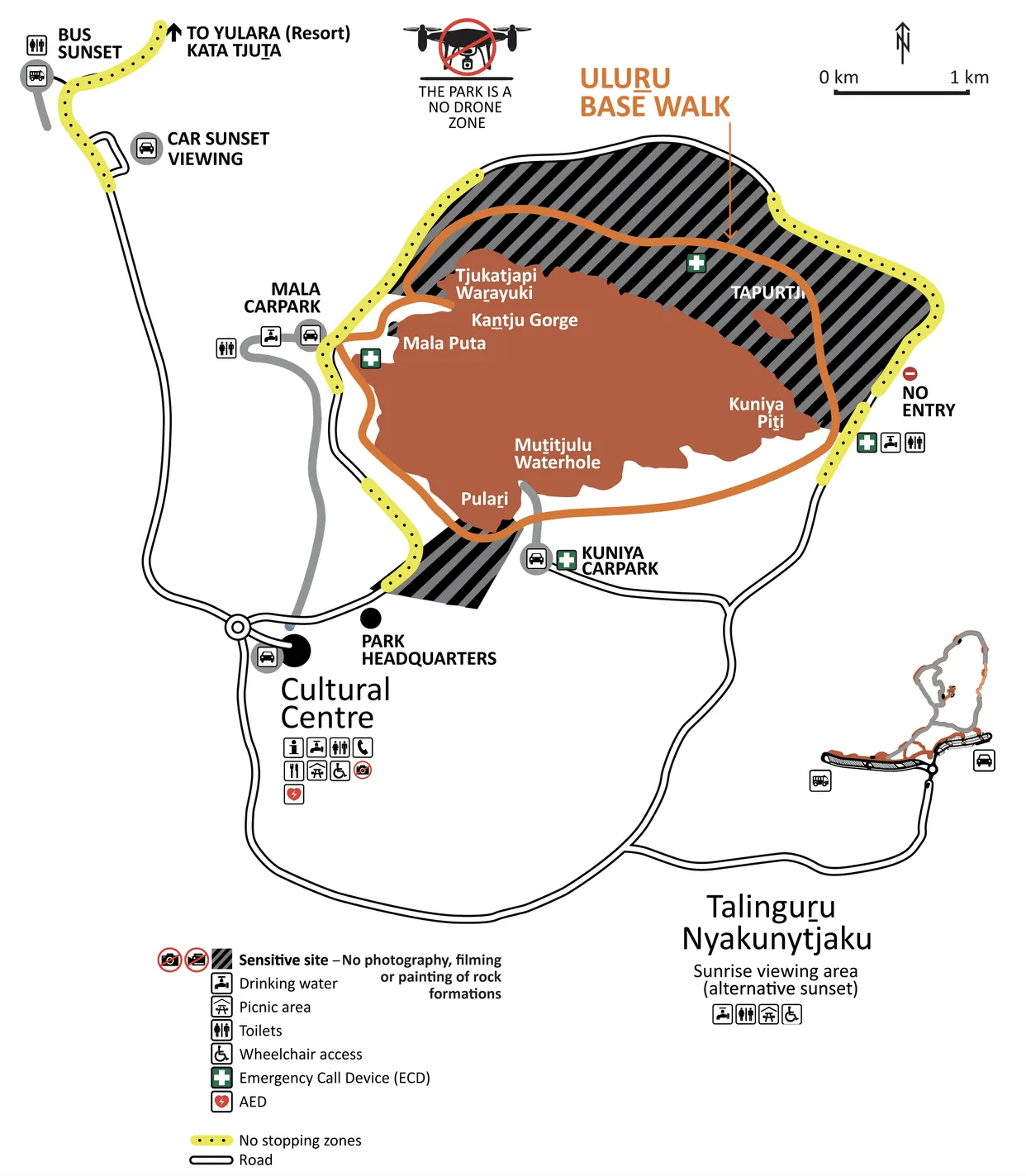
The Uluru Base Walk is located within Uluru–Kata Tjuta National Park in the Northern Territory. The walk can be accessed from several points around the base of Uluru, but the most common starting locations are Mala Carpark on the north-western side of the rock and Kuniya Carpark on the south-eastern side near Muṯitjulu Waterhole. Uluru is approximately a 20-minute drive from Ayers Rock Resort in Yulara, where most accommodation, restaurants and services are located. From Uluru Airport (AYQ), the park entrance is around 10 minutes away, while travellers driving from Alice Springs should allow about 4.5 to 5 hours via the fully sealed Stuart Highway and Lasseter Highway. Once inside the national park, a loop road circles Uluru and provides access to the various carparks, walking tracks and viewing areas around the rock. A valid Uluṟu–Kata Tjuṯa National Park pass is required to access Uluru and Kata Tjuta and cannot be substituted with an NT Parks Pass. Passes can be purchased online in advance or at the park entry station and are typically valid for three days, giving visitors plenty of time to explore both Uluru and Kata Tjuta.
Key Facts About the Hike
Provided below are the key facts about the hike as well as the AllTrails map.
| Uluru Base Walk – Key Facts | |
|---|---|
| Trailhead | Mala Carpark (north-west side) or Kuniya Carpark (south-east side) |
| Trail Type | Loop |
| Distance | 10.6km |
| Duration | 3.5–5 hours (allow longer for stops) |
| Accumulated Elevation Gain | 156m |
| Difficulty | Grade 3 – moderate (due to length and exposure) |
| Best Time to Hike | April to September |
| Heat policy | Sections may close in extreme heat |
Important access notes based on park regulations:
- The park is a strict no-drone zone.
- Some areas are marked as culturally sensitive sites — NO photography or filming in marked areas.
- There is no mobile phone reception on the walk.
- Some tracks close in the afternoon during Summer, due to high risk of heat stroke.
Here is the map of the walk from Uluṟu–Kata Tjuṯa National Park website.
Essential Tips Before Walking Around Uluru
Although the Uluru Base Walk is mostly flat and accessible, the harsh desert environment means preparation is essential. A little planning will ensure your walk is both safe and enjoyable.
Start Early
Even outside the peak summer months, temperatures in Central Australia rise quickly after mid-morning. Beginning the walk early in the morning allows you to complete most of the circuit before the strongest heat of the day. Early starts also provide the best lighting for photography and a quieter experience before tour groups arrive.
Carry Plenty of Water
Water is the single most important item for the Uluru Base Walk. Drinking water is available at Mala carpark and halfway along the walk however, it is recommended to carry:
- At least 3 litres per person
- Electrolytes in warmer months
- A refillable bottle or hydration bladder
Wear Proper Sun Protection
Uluru sits in a highly exposed desert landscape, meaning shade is limited along large sections of the track. Essential sun protection includes:
- Wide-brim hat
- High-SPF sunscreen
- Sunglasses
- Lightweight long-sleeve clothing
These simple precautions can make a huge difference during long walks in the outback sun.
Wear Comfortable Walking Shoes
Although the Uluru Base Walk does not involve steep climbs, the terrain includes:
- Compact gravel paths
- Sandy patches
- Uneven natural surfaces
Sturdy walking shoes or hiking trainers with good grip will make the walk far more comfortable.
Respect Cultural Restrictions
Uluru is a living cultural landscape, deeply significant to the Anangu people. Visitors should always:
- Follow signage regarding no photography areas
- Stay on designated walking tracks
- Avoid entering restricted or sacred sites
Respecting these guidelines helps protect both the environment and the cultural heritage of the area.
Check Conditions Before Starting
Conditions in the desert can change quickly. Before beginning your walk, check the information boards at the car park for:
- Heat warnings
- Temporary track closures
- Cultural restrictions
Park rangers provide daily updates to ensure visitor safety.
Sections of the Uluru Base Walk (Clockwise Direction)
The Uluru Base Walk is a 10.6km circuit around the base of Uluru that allows visitors to experience the rock from every angle. Walking the full loop takes around 3½ hours, though most travellers allow longer to stop at cultural sites, caves, waterholes and interpretive areas along the way. The track passes through acacia woodlands, grassed claypans and desert landscapes, with views of native vegetation such as bloodwood trees and native grasses, as well as several waterways and waterholes that support wildlife in this otherwise arid environment. Although the walk forms a complete loop, it is made up of several distinct sections. Walking clockwise from Mala Carpark, the route takes you through the following tracks.
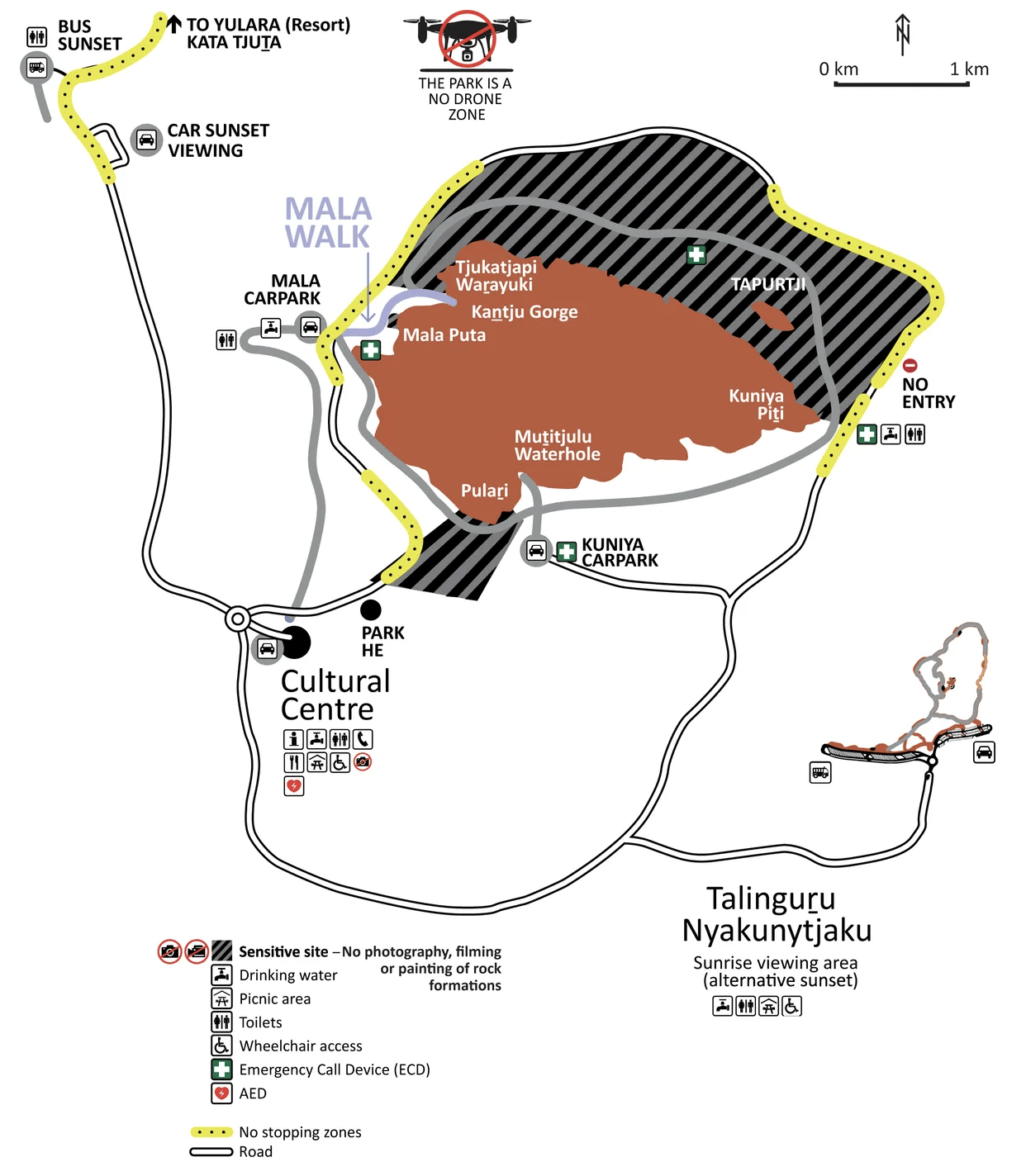
Mala Walk
The Mala Walk forms the first section of the Uluru Base Walk when travelling clockwise from Mala Carpark. This area is one of the most culturally significant parts of Uluru and provides a powerful introduction to Aṉangu culture and history. Walking beneath the towering north-western face of Uluru, the path leads past caves that were once used as campsites by the Mala people when they first arrived at Uluru. These caves provide insight into daily life on Country and the ways Aṉangu people lived, worked and shared knowledge across generations. One of the most fascinating stops along this section is the kitchen cave, where food was traditionally prepared. Nearby, interpretive signage explains how Aṉangu people hunted, gathered bush foods and used natural resources from the surrounding landscape. Visitors can also see ancient rock art preserved on the walls of these caves. These artworks represent important cultural stories and teachings that have been passed down through countless generations. If possible, join a free ranger-guided Mala walk in the early morning to gain cultural insight directly from park rangers.
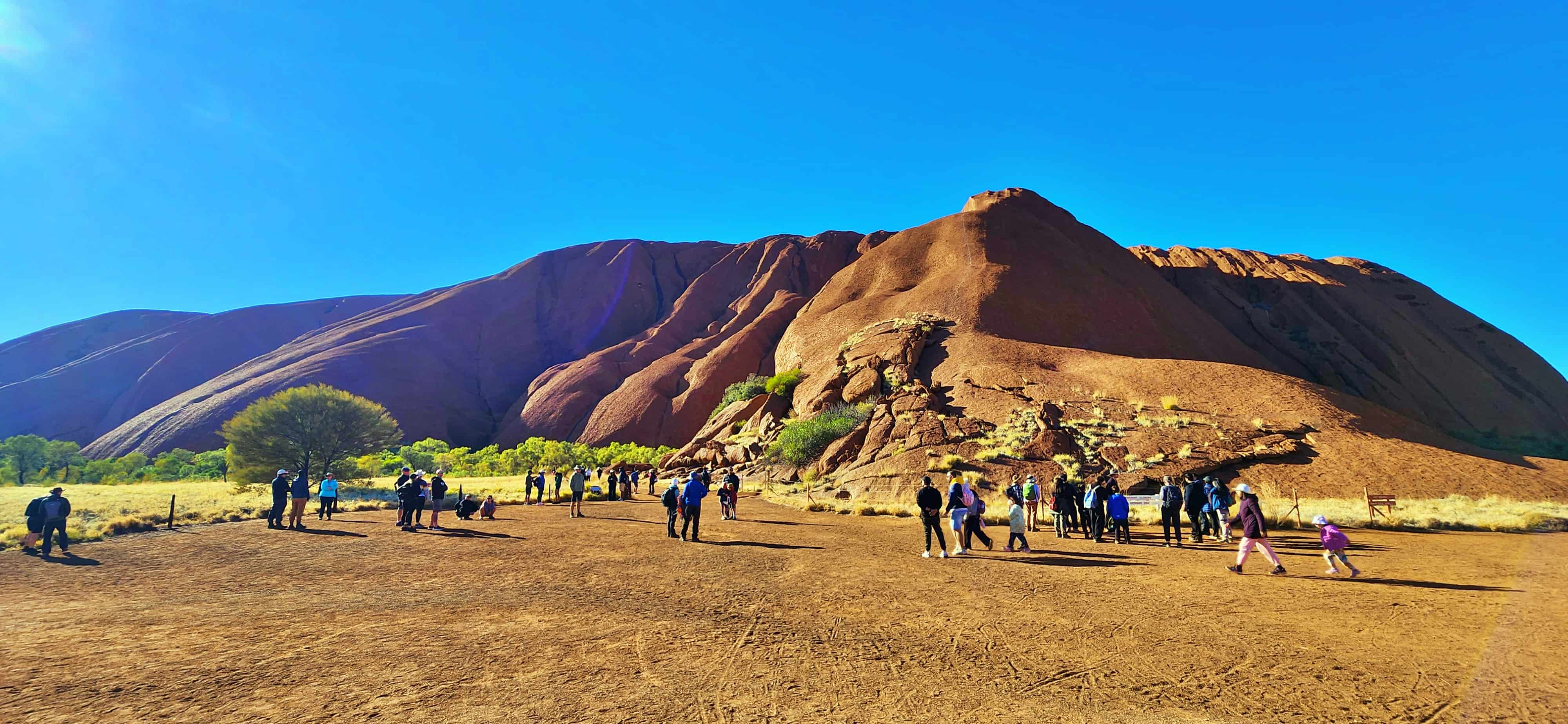
The Mala Walk continues towards Kaṉtju Gorge, where sheer rock walls rise dramatically above the ground. The gorge creates a striking natural amphitheatre at the base of Uluru and is considered a place of deep calm and reflection. After heavy rainfall, water occasionally cascades down the rock face into the waterhole below, creating a rare waterfall in the desert landscape.
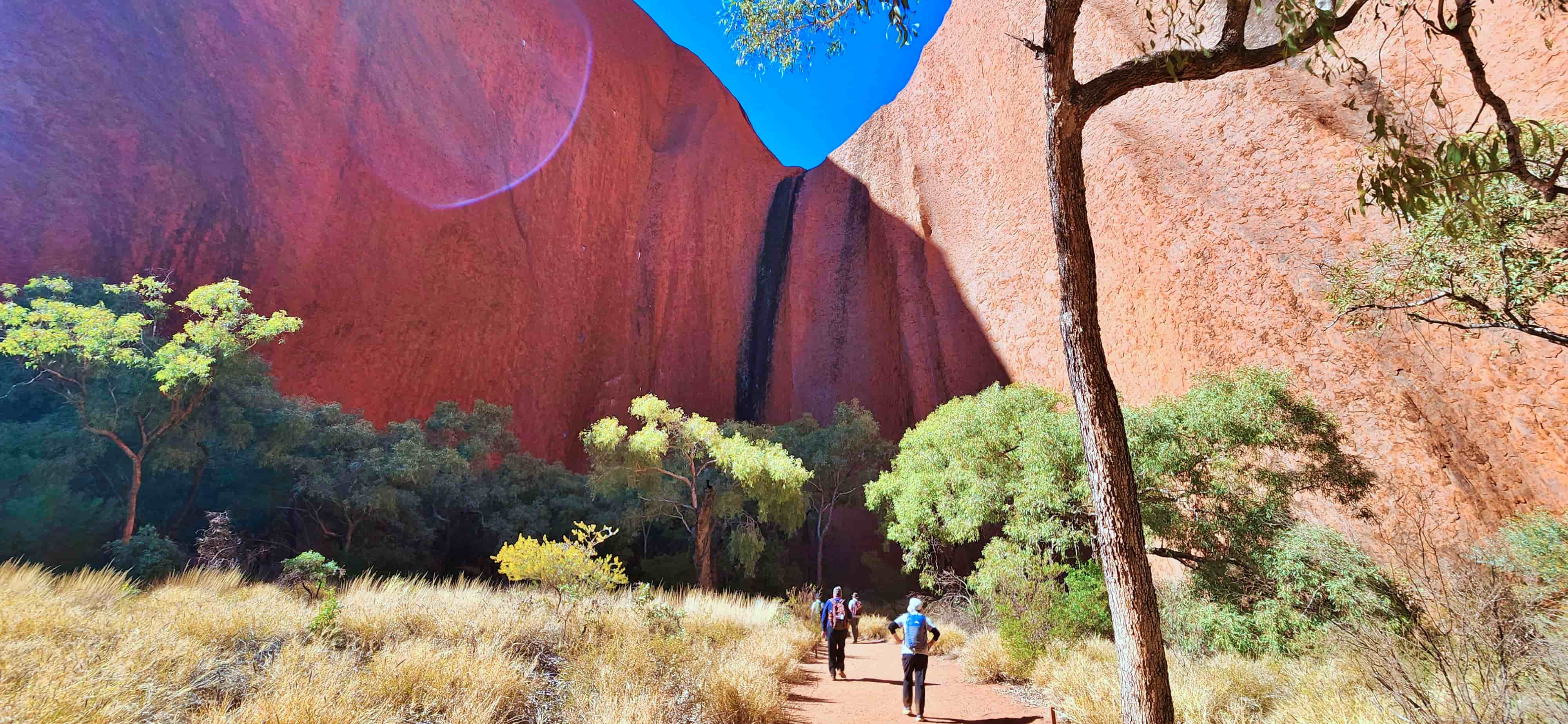
Distance: 2km return
Time: about 1 hour 30 minutes
Grade: Easy to moderate
Facilities: Water, toilets and Emergency Call Device (ECD)
North-East Face Walk
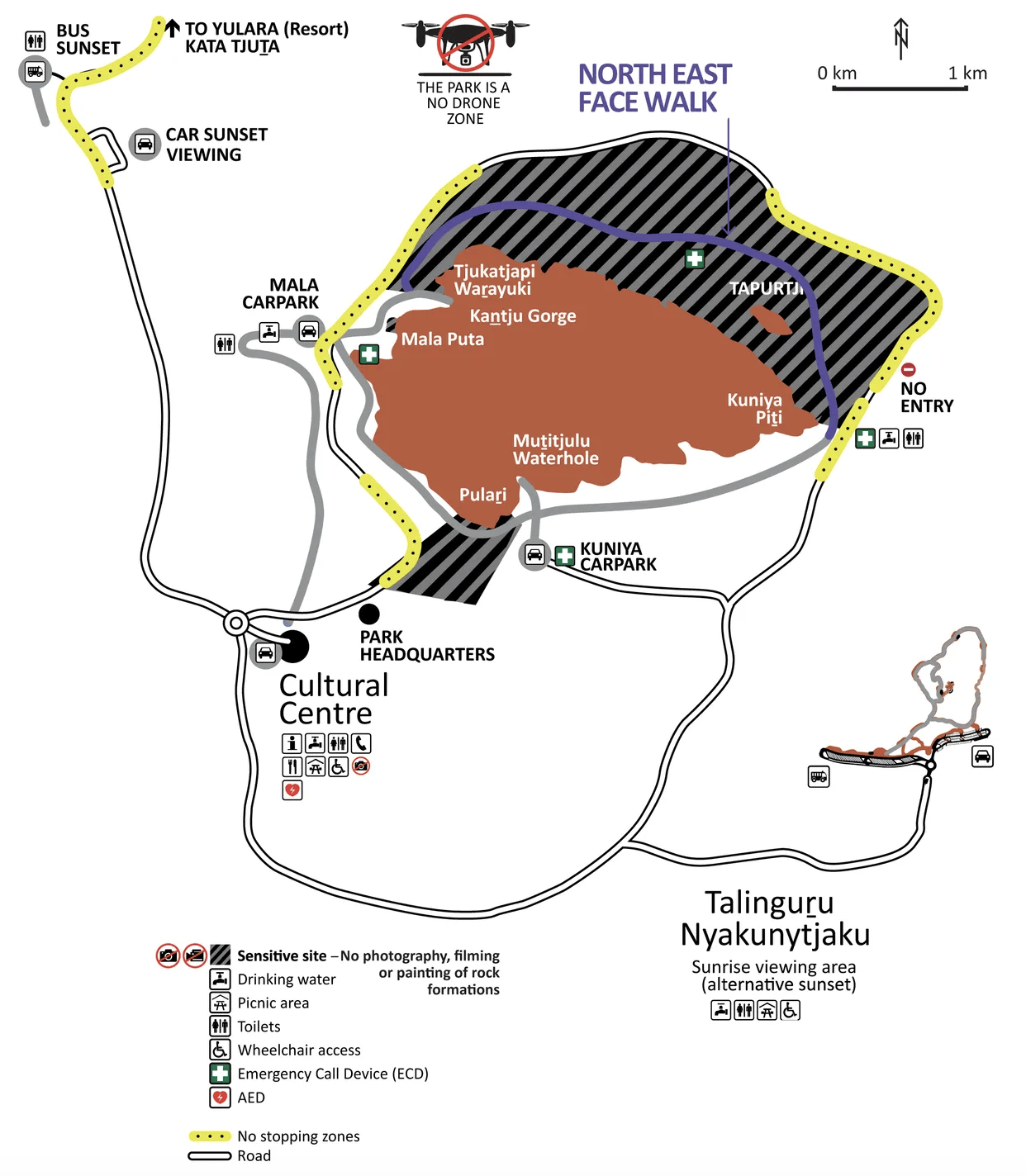
Continuing clockwise from Mala, the North-East Face Walk follows a long stretch along the base of Uluru’s northern and eastern sides. This section offers a different perspective of the rock, with sweeping views of its changing colours and surface patterns. From here you can clearly see the deep vertical grooves and natural channels carved into the rock over millions of years by wind and water. The path moves through open desert terrain, where the landscape is dotted with grasses, shrubs and hardy trees adapted to the harsh conditions of Central Australia. Walking this section highlights the immense scale of Uluru as the rock stretches endlessly beside the track. Do note that photography, filming or painting of rock formations is prohibited throughout this section of the walk. The North-East Walk closes for the day from 11am when temperatures reach 40°C or higher; because of this, it is recommended to start early if you plan to include this section as part of the full Uluru Base Walk.
Distance: 4.4km one way
Time: about 1 hour 45 minutes
Grade: Moderate
Facilities: Water and Emergency Call Device (ECD)
Toilets: None along this section
Kuniya Walk to Muṯitjulu Waterhole
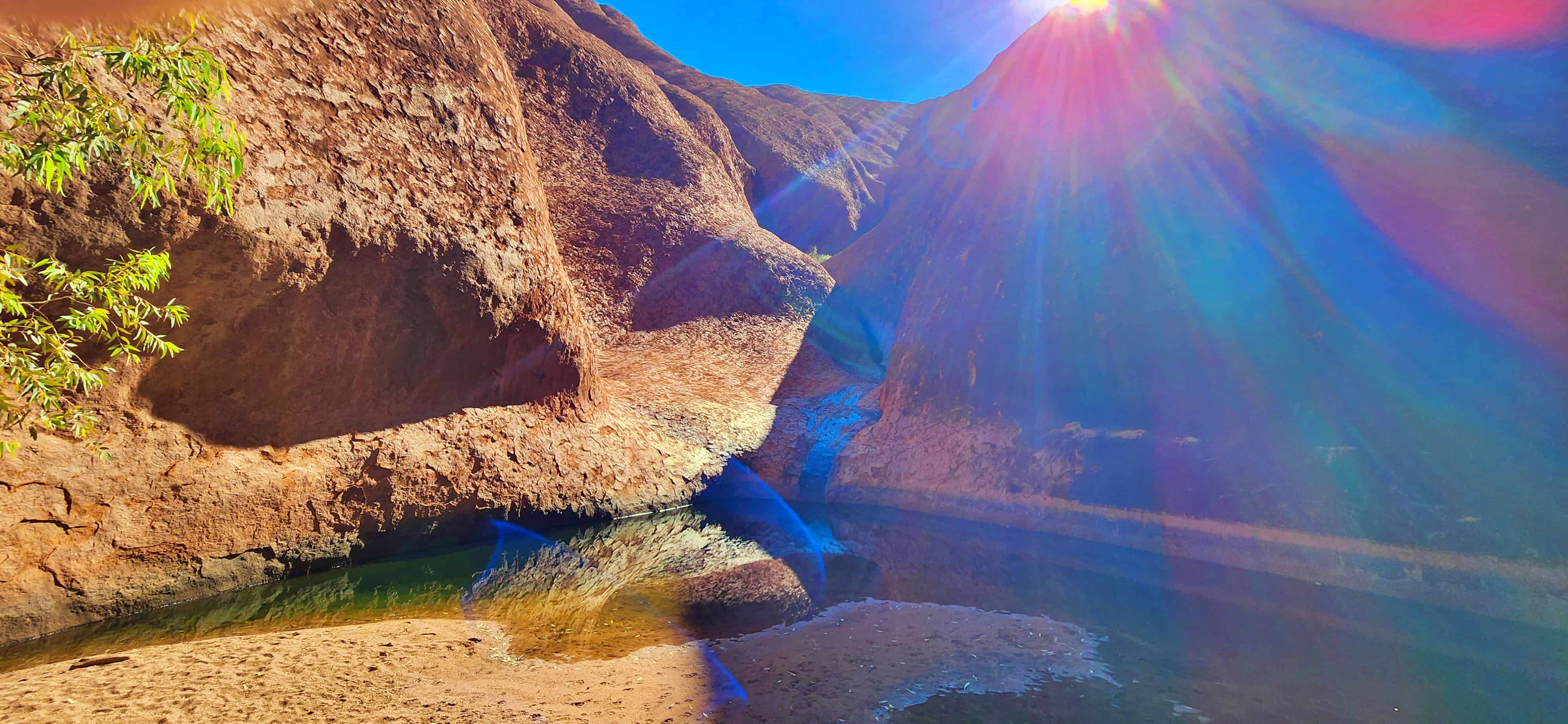
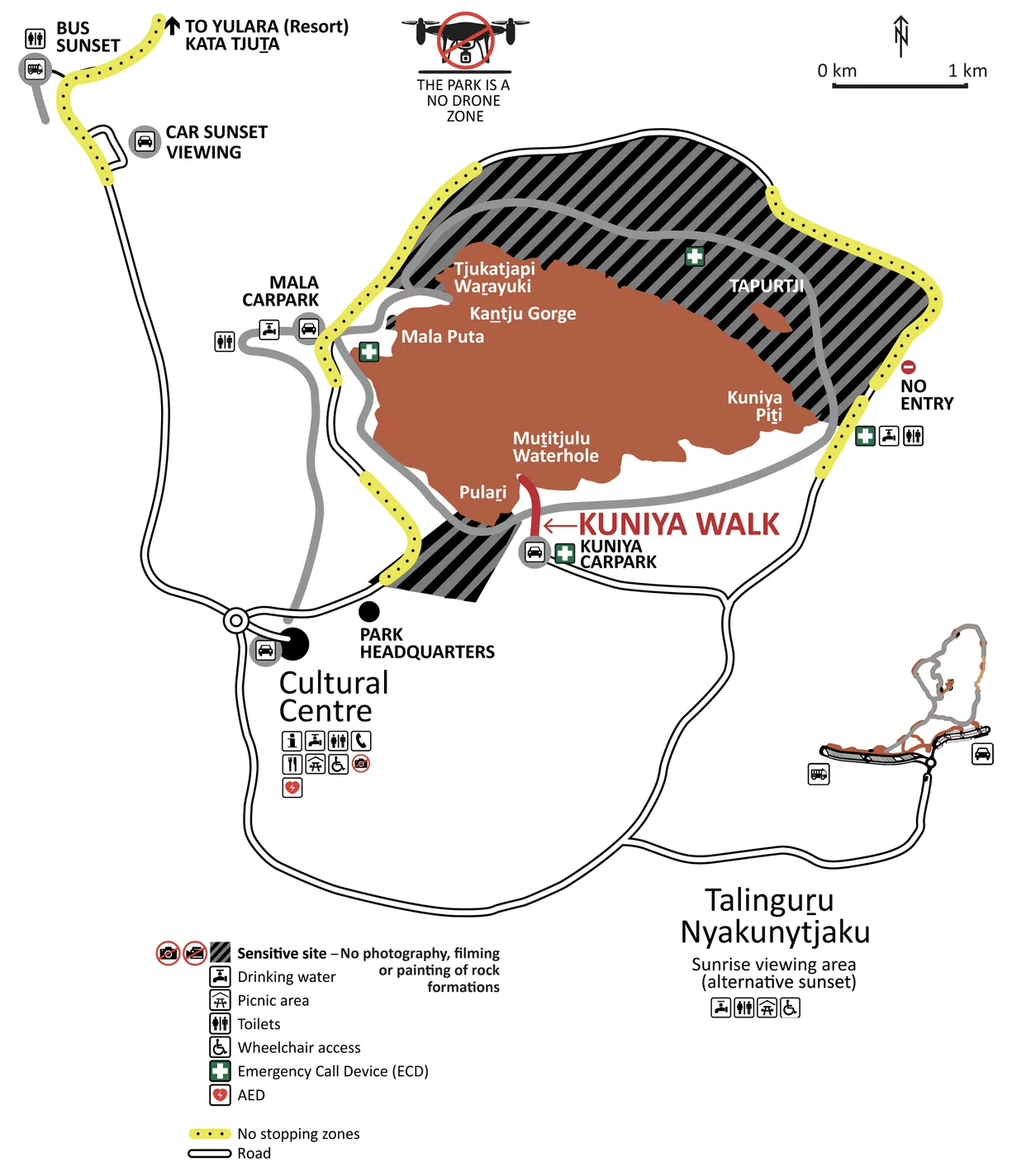
Further along the base of Uluru, the walk reaches the Kuniya Walk, a short but culturally important detour leading to Muṯitjulu Waterhole. Muṯitjulu is one of the few permanent water sources around Uluru and plays an important role in supporting local wildlife and vegetation. The surrounding area is noticeably greener than much of the surrounding desert landscape, with tall grasses and river red gum trees growing near the water. This shaded environment provides habitat for animals such as wallabies, which are sometimes seen among the grasses near the waterhole. The Kuniya Walk is also deeply connected to one of the major Tjukurpa stories of Uluru — the story of Kuniya, the woma python woman, and Liru, the poisonous snake man. According to Aṉangu tradition, the story describes an ancient battle that took place in this area and forms part of the cultural law that governs the landscape. Interpretive signs along the track explain the story and the cultural significance of the surrounding caves and rock formations. These caves are still important to Aṉangu people today.
Distance: 1km return
Time: 30–45 minutes
Grade: Easy to moderate
Facilities: Emergency Call Device (ECD)
Toilets: None
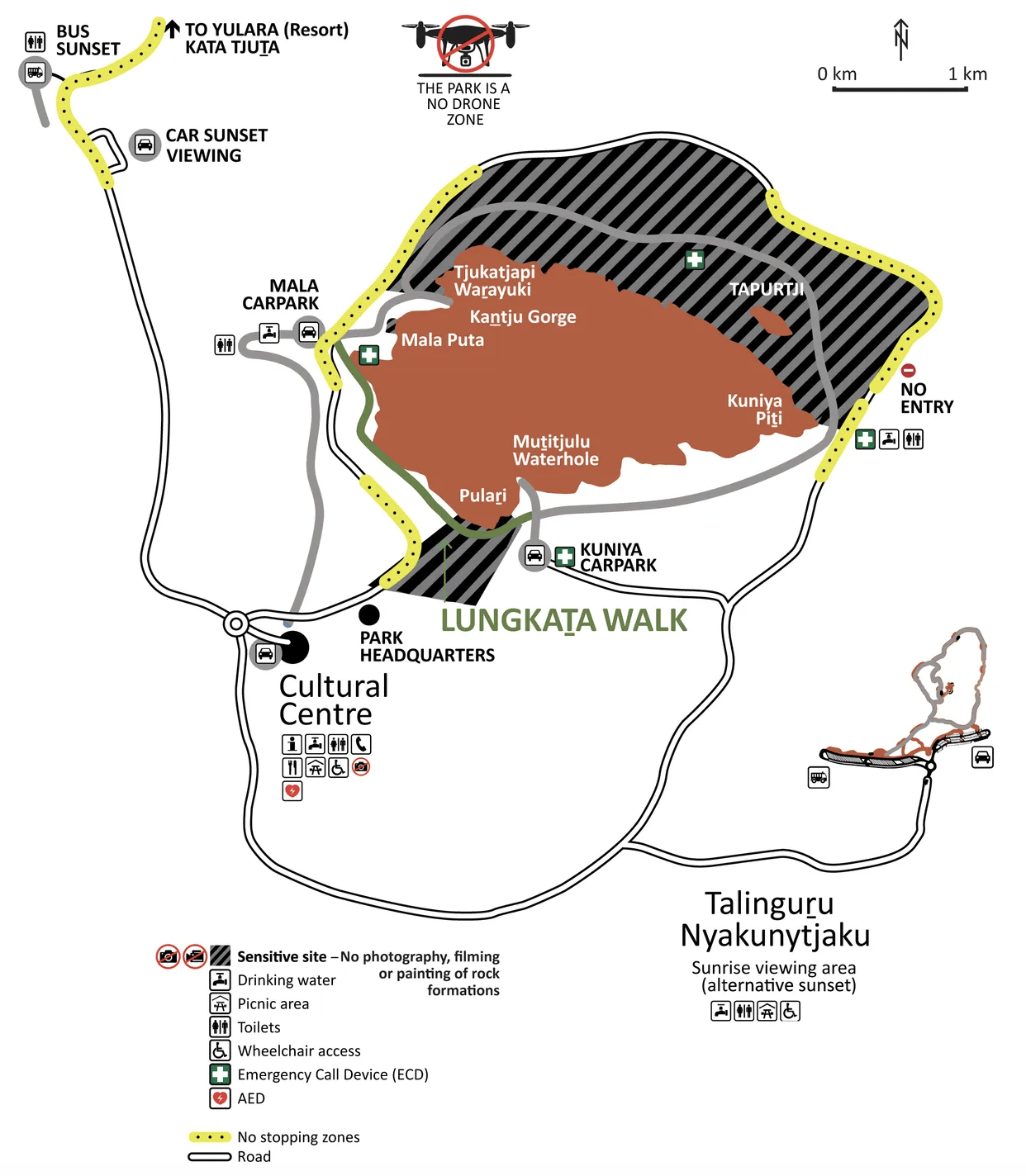
Lungkaṯa Walk
The Lungkaṯa Walk forms another section connected to the Uluru Base Walk and offers a fascinating mix of geology, wildlife and cultural storytelling. Along this track, parts of the rock slope down toward the walking path, creating dramatic formations where the sandstone seems to lean over the track. In several places, elevated caves and crevices carved by erosion are visible high above the path. These caves are home to large numbers of birds, making the area a rewarding stop for birdwatchers as well as hikers. This walk is also linked to the story of Lungkaṯa, the cheeky blue-tongue lizard ancestor. The story teaches an important cultural lesson about respecting others and not taking what does not belong to you. The area is also associated with paṉpaṉpalala birds, ancestral birds named after the distinctive sound of their call. Because of the exposed nature of the landscape and the extreme heat that can occur in Central Australia, this section also operates under a heat policy - the Lungkaṯa Walk closes from 2:00pm when temperatures reach 40°C or higher.


Distance: 4km return
Time: about 1 hour 30 minutes
Grade: Moderate
Facilities: Water and toilets
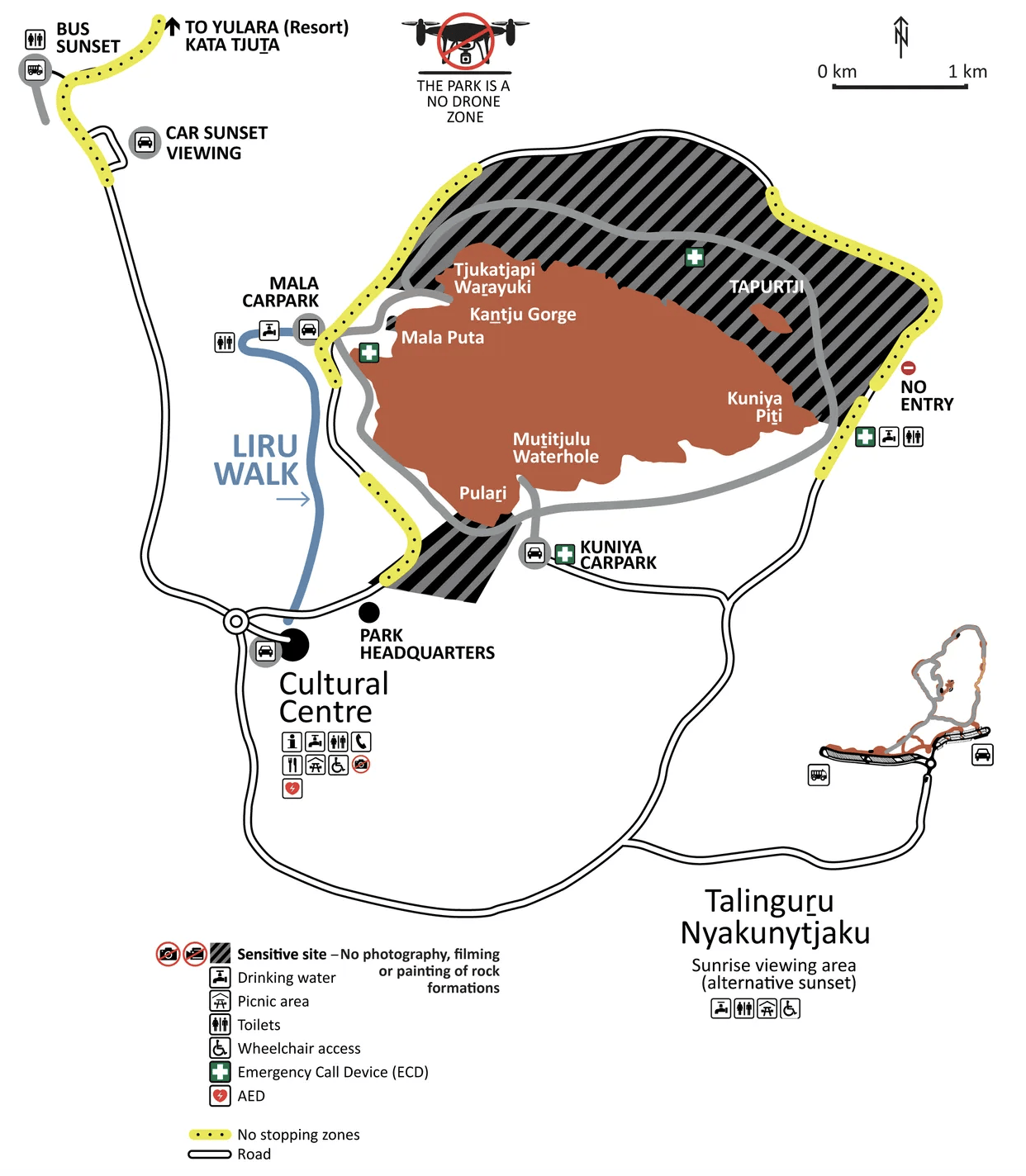
A note on Liru Walk (Cultural Centre Link Track)
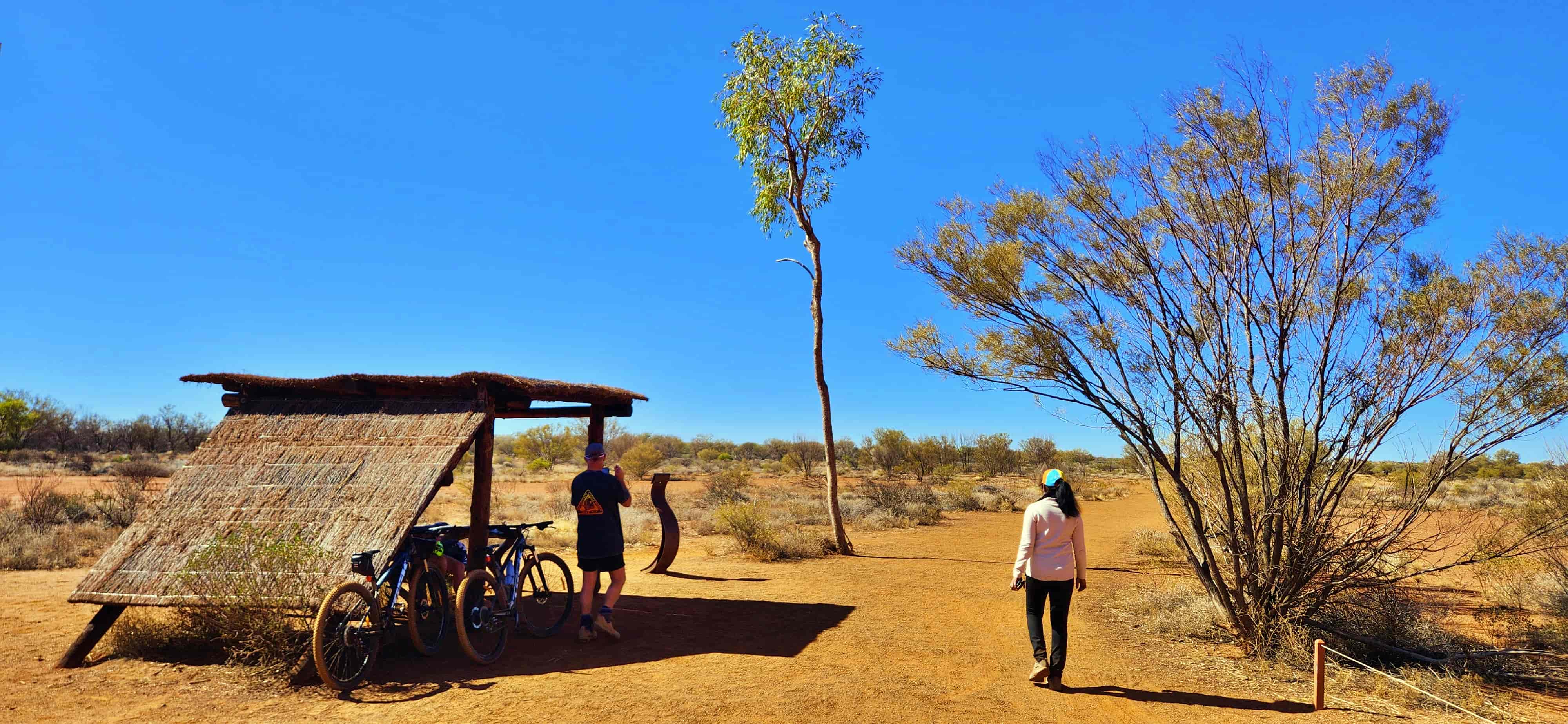
Although Liru Walk is not part of the Uluru Base Walk itself, it provides an important link between Mala Carpark and the Cultural Centre. A short distance from the Cultural Centre, the track opens into a sandy clearing with a large shelter that offers uninterrupted views of Uluru. This quiet spot is often overlooked by visitors and can be a peaceful place to pause and take in the landscape. Because many visitors simply pass through the area on bicycles, the walk can feel surprisingly calm and uncrowded compared to other parts of the park.
Distance: 4km return
Time: about 1 hour 30 minutes
Grade: Easy to moderate
Facilities: Water and toilets
Driving past Uluru is impressive. Standing in front of it is powerful. But walking around it — slowly, deliberately, respectfully — is transformative. The Uluru Base Walk reveals that this is not a single rock, but a landscape of stories, shelters, water sources and sacred places. Each section offers something new: cool shaded caves, towering vertical walls, textured erosion lines, ancient art, and rare desert waterholes. By the time you complete the circuit, you won’t just have seen Uluru — you’ll have experienced it. And that difference matters!
Uluru Base Walk FAQs
Visitors planning the Uluru Base Walk often have similar questions about the distance, difficulty, timing and cultural considerations. Below are answers to some of the most commonly asked questions to help you plan your walk around Uluru.
How long does the Uluru Base Walk take?
The full Uluru Base Walk is 10.6km and typically takes 3.5 to 5 hours to complete. The exact time depends on your walking pace and how often you stop to explore sites such as Kantju Gorge, Mala caves, and Mutitjulu Waterhole. Many visitors take longer because there are numerous interpretive signs and scenic spots worth pausing for along the way.
Is the Uluru Base Walk difficult?
The Uluru Base Walk is generally considered a Grade 3 walk, meaning it is moderately easy but requires a reasonable level of fitness due to its length and the exposed desert environment. The track itself is mostly flat and well-maintained, with surfaces consisting of gravel paths and sandy sections. There are no steep climbs, but the lack of shade and high temperatures can make the walk more challenging, particularly in summer.
Can you walk all the way around Uluru?
Yes — visitors are allowed to walk the entire circumference of Uluru via the designated 10.6km Base Walk track. This is the only way to experience every side of the monolith up close. However, certain sacred sites are restricted, and signage clearly indicates areas where photography is not permitted or access is limited.
Where should you start the Uluru Base Walk?
The walk can begin at several points, but the two most common starting locations are:
- Mala Carpark – popular starting point and location of the ranger-guided Mala Walk
- Kuniya Carpark – close to Mutitjulu Waterhole and cultural sites
Starting at Mala early in the morning is often recommended, as this section is shaded for longer and offers fascinating cultural interpretation.
Do you need a park pass to walk around Uluru?
Yes. Uluru is located inside Uluru-Kata Tjuta National Park, and all visitors must purchase a park entry pass before entering. Passes are typically valid for three days, giving visitors plenty of time to explore both Uluru and Kata Tjuta.
Can you cycle the Uluru Base Walk?
Cycling around Uluru is permitted along the base road that follows the rock’s perimeter, which is approximately 15km long. However, bicycles are not allowed on most sections of the pedestrian walking track itself. Cycling can be a great option for travellers who want to experience the full circuit more quickly.
Is the Uluru Base Walk open all year?
The walk is generally open year-round, but sections may close temporarily due to extreme heat or cultural reasons. During the summer months, temperatures can exceed 40°C and the park may implement heat safety closures. Always check the latest conditions at the visitor centre or car park notice boards before beginning your walk.
Common Mistakes to Avoid on the Uluru Base Walk
The Uluru Base Walk may appear straightforward, but the remote desert environment and cultural significance of the area mean there are several common mistakes that visitors make. Avoiding these will help ensure your walk around Uluru is safe, respectful and genuinely rewarding.
Starting Too Late in the Day
One of the most frequent mistakes is underestimating how quickly temperatures rise in Central Australia. Even during the cooler months, the sun becomes intense by mid-morning. Starting late increases the risk of heat stress, dehydration and fatigue — particularly on the exposed eastern and southern sections of the loop.
Tip: Aim to start at or shortly after sunrise, especially if you plan to complete the full 10.6km circuit.
Carrying Too Little Water
Visitors often assume water will be available along the track. It isn’t. Drinking water is only available at Mala carpark and around halfway along the walk. Running out of water on the base walk can quickly become dangerous.
Tip: Carry at least 3 litres per person, and more during warmer months. Electrolytes are strongly recommended.
Ignoring Heat Warnings and Track Closures
Uluru-Kata Tjuta National Park operates under a heat safety policy, and sections of walks may close when temperatures become unsafe. Ignoring signage or attempting to “push through” extreme heat is a serious risk and one of the main reasons emergency call devices are installed along the track.
Tip: Always check the information boards at the car park before starting and follow ranger advice without exception.
Not Respecting Cultural Restrictions
Uluru is a living cultural landscape, not just a tourist attraction. Mistakes visitors make include:
- Taking photos in clearly marked no-photography areas
- Leaving the designated walking track
- Entering restricted or sacred sites
These actions are deeply disrespectful to Anangu culture and can cause lasting damage to culturally significant areas.
Tip: Follow all signage carefully and treat the landscape with the same respect you would a place of worship.
Underestimating the Distance
At 10.6km, the Uluru Base Walk is longer than many people expect — especially when walking in heat, sand and full sun. Some visitors start the walk without realising how far it is and are forced to turn back partway through due to fatigue or time constraints.
Tip: If you’re unsure about completing the full loop, consider walking one or two sections only, such as Mala Walk or Mutitjulu Waterhole, rather than attempting the entire circuit.
Wearing the Wrong Footwear
Although the walk is mostly flat, the surface varies between compact gravel, sandy patches and uneven natural terrain. Thongs, sandals and smooth-soled shoes offer little support and increase the risk of blisters or slips.
Tip: Wear comfortable walking shoes or hiking trainers with good grip and breathability.
Relying on Mobile Phone Reception
Mobile reception around Uluru is limited and unreliable. Visitors sometimes assume they can rely on their phone for navigation, weather updates or emergencies — which is not always the case.
Tip: Let someone know your plans, carry enough supplies, and familiarise yourself with the location of Emergency Call Devices (ECDs) along the track.
Treating the Walk as “Just a Walk”
Perhaps the biggest mistake is rushing through the Uluru Base Walk without taking time to understand its significance. Uluru is not simply a rock to be circled — it is a place of stories, law, history and ongoing cultural connection.
Tip: Slow down. Read the interpretive signs. Sit quietly at places like Mutitjulu Waterhole. The experience is far richer when approached with patience and respect.
Why Avoiding These Mistakes Matter
Walking around Uluru is one of the most meaningful experiences in Central Australia — but only when done thoughtfully. Proper preparation, cultural awareness and respect for the environment transform the Uluru Base Walk from a physical activity into a deeply memorable journey. Avoid these common mistakes, and you’ll leave with far more than photos — you’ll leave with understanding.
Love our itinerary? Excited to embark on the Uluru Base Walk? Book your accommodation via Booking.com below at cheaper prices!
This post may contain affiliate links. This means that, at no additional cost to you, we may earn a small commission if you make a purchase through the links provided. These commissions help support our website and allow us to continue sharing our travel experiences. Thank you for your support.
This itinerary is based on our personal experiences and recommendations. All information is provided for general guidance only and may change due to circumstances beyond our control. Travellers are encouraged to independently verify details and make choices according to their own preferences and safety considerations. We do not accept responsibility for any loss, injury, or inconvenience sustained by anyone using our itineraries.